












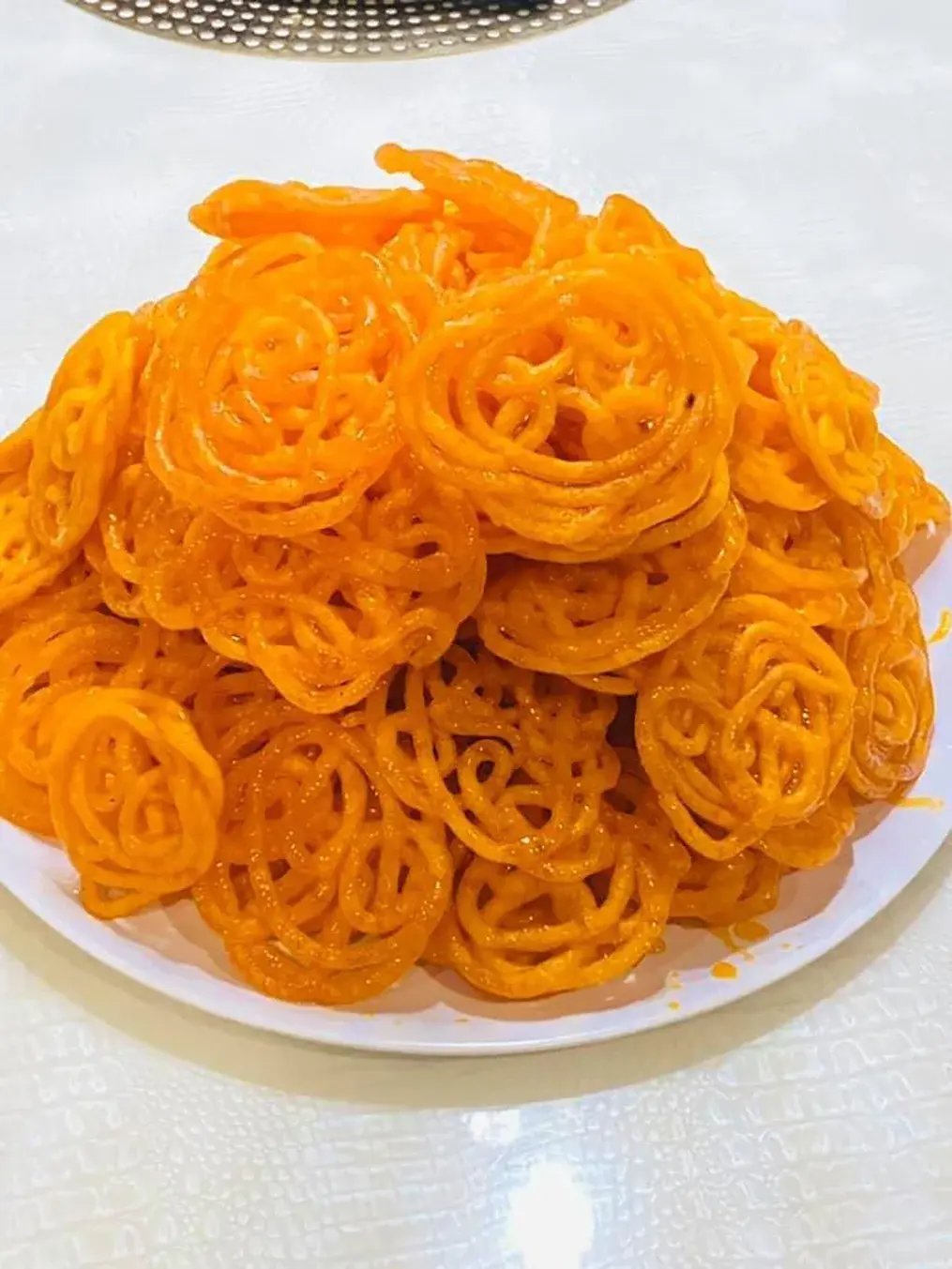
Make jalebis with this easy-to-follow recipe and keep in mind the extra tips and tricks offered, handy for several indian sweets.

Jalebis are among the favorite Indian sweets. With their bright orange color, exciting crunch, and gooey interior that melts in the mouth, jalebis are a favorite of people all over the country. From breakfast to a post-dinner dessert, they are enjoyed by people in a variety of different ways, and eaten at different times with different pairings. All of this is proof of their versatility and universality. So here’s how you can make jalebis at home and impress people at the next dinner party you throw.
Ingredients:

For the jalebi batter:
- 1 cup all-purpose flour
- 2 tablespoons gram flour (besan)
- 1/8 teaspoon turmeric powder
- 1 pinch baking soda or ¼ teaspoon baking powder
- 1 cup water
- 2 tablespoons all-purpose flour, to be added later after the batter has fermented
For the sugar syrup:
- 1 cup sugar
- 1/2 cup water
- 1/4 teaspoon saffron strands
- oil for deep frying, as required – or ghee
Directions:
- In a bowl, add the flour and gram flour, baking soda, and turmeric powder. Mix all the ingredients well until thoroughly combined. Then add water to the mix, a little at a time, and keep mixing as you do. Break up any lumps that might form in the batter and then briskly mix the batter in a circular direction until fully mixed. This adds volume to the batter and makes it even, which will then make it easier to cook. The batter should have a flowing consistency. Once ready, cover the batter and let it sit for 12 hours so it can ferment.
- Once fermented, you’ll notice the batter has become slightly thinner. So add some flour and mix in to thicken the batter again.
- Now add the batter to a squeezable tomato ketchup bottle, which is easily available in the market. Or into a piping bag if you prefer. Set aside.
- In a pan, add the sugar and saffron strands. Then add water and begin stirring it on low heat. The sugar should dissolve completely. Cook till it has reached one string consistency. That means that if you dip your index finger in the syrup and then touch it to your thumb and then pull your fingers apart, a string will form between your two fingers.
- Once this consistency is reached, turn off the heat and add lemon juice. Mix well. Set aside.
- In a kadhai, add the oil and heat it. You can also use ghee, which gives a deeper flavor. Add a pinch of batter to check if the oil is hot enough. If it comes up immediately and crackles, the oil is ready.
- Squeeze the bottle and make circles in the batter. Or make the 8 shape. Be careful about splatter since the oil is hot. Once the jalebis are cooked on one side, turn them over and fry the other side too. Once they are light golden, your jalebis are ready. Remove with tongs and shake off any excess oil.
- Place the fried jalebis immediately in the sugar syrup. Then turn so that the other side can also get coated in the syrup. Keep them for about 5 minutes in the syrup, so they have a deeper color.
- Remove and shake so the excess syrup falls off. Place on a plate. Serve hot or at room temperature.
Notes, tips and tricks

- When fermenting the dough, consider the temperature of the place where you stay. If it's hot, it will ferment faster, and you’ll need to let it sit for about 6 hours. If it's colder, it will need longer to ferment, about 10 hours. Keep an eye on it since if it ferments too much, it will become sour and have a bad smell.
- The batter should have a specific consistency where it flows but is still thick. It should not be too runny or too thick. It should flow out easily from the head of the ketchup bottle.
- Be careful about the consistency of the sugar syrup. Strictly follow the one-string consistency rule. If it's not as thick, the jalebis will absorb it like water, soften, and break. If it's too thick, then once absorbed by the jalebis, it will crystallize inside and break the jalebis once they have cooled.
- The recipe can easily be doubled or halved as needed.
Tips & Tricks for Perfect Jalebi
Fermentation Tips
In warm climates, the batter ferments quickly, so check it after a few hours rather than following a fixed time. During cool weather, it may need longer or a slightly warmer area to ferment quickly. Make sure to look out for a mild tangy smell and small bubbles on the surface. Try to avoid too much fermenting, as it can make the jalebi too sour and affect its texture.
Syrup Consistency
To ensure perfect jalebi, the sugar syrup should reach a sticky, one-string consistency. Make sure to test it by taking a little syrup between your thumb and forefinger. Gently pull your fingers apart; it should form one thin, continuous thread. Don't overcook, as a thick syrup can make the coating of the jalebi hard to eat. Keep the syrup warm while dipping freshly fried jalebi so it absorbs evenly without becoming soggy.
Frying Techniques
Keep the oil or ghee at a moderate temperature rather than being too hot. If the oil is too hot, the jalebi will turn golden brown quickly without cooking properly from the inside. Form steady and thin spirals and avoid making too many jalebis at one time. Keep turning them gently for even cooking. Then immediately dip the hot jalebi into warm sugar syrup for the best texture possible.
Common Mistakes to Avoid
Batter Consistency Issues
Common jalebi batter mistakes are either making it too thick, too runny, or fermenting it for too long. A thick batter produces uneven jalebi, while a runny one spreads too much during frying. Adjust the consistency with small amounts of water or flour. If the fermentation is insufficient, allow more time for the batter to ferment properly. Otherwise, it will taste sour.
Syrup Problems
Dissolve the sugar completely before boiling, and avoid stirring once it starts to bubble. Adding a few drops of lemon juice can help keep the syrup smooth. Don’t overcook the syrup, as excessive heating can trigger crystallization and make it too thick for jalebi.
Serving Suggestions & Variations
Traditional Pairings
Jalebi pairs well with traditional accompaniments like rabri, which balances its crisp, syrupy hot texture with a rich and cooling texture. You can also serve jalebi with thick sweetened milk, or a scoop of malai kulfi. As far as toppings are concerned, you can garnish with pistachios, almonds, or a few strands of saffron.
Modern Twists
Try to give classic jalebi a modern twist by adding ingredients like saffron, cardamom, rose water, or orange zest to either the batter or the sugar syrup. You can also experiment with pistachios, coconut, or a hint of cinnamon. For a richer presentation, you can pair jalebi with vanilla ice cream.
Frequently Asked Questions
1. Why is my jalebi batter too runny?
Too much water or natural fermentation breaking down the flour structure are the reasons for the batter becoming too runny. Just add a little flour until it becomes smooth and thick enough to pipe easily without breaking.
2. How long should jalebi batter ferment?
Fermentation usually takes several hours, but the exact time depends on your room temperature. In warm weather, it may ferment faster. Try to look for tiny bubbles and a mild tangy smell just before using the batter.
3. Why does my jalebi lose its shape?
This usually happens when the batter is too thin, or the oil isn’t hot enough. Make sure to adjust the batter consistency and test one jalebi at a time to ensure that it holds the spiral shape.
Frequently Asked Questions
How do I ensure my jalebi is crispy? 
To ensure crispy jalebi, keep the oil at medium heat and avoid overcrowding the frying utensil. Pipe thin, even spirals and fry until golden brown. Dip freshly fried jalebi briefly into warm sugar syrup to maintain its crunch.
Can I make jalebi without fermentation?
Yes, you can make jalebi without fermentation by using baking soda or a little baking powder for lightness. The texture and taste may differ slightly, but they can still turn out crispy and delicious.
What can I serve with jalebi?
Jalebi tastes amazing when paired with rabri, malai kulfi, or thick sweetened milk. Top it off with pistachios, almonds, or saffron, or a scoop of vanilla ice cream.
Like This Article?
More Like This



Popular Articles


Trending Web Stories


Curated Recipes